
Plenty of quality teams still manage their processes through a combination of Word documents, email chains, shared drives, and physical binders. It works — until it doesn't. An audit reveals an expired SOP that's still in circulation. A CAPA sits unresolved for nine months because the email reminder got buried. A change control request needs signatures from four departments, and the paper form has been sitting on someone's desk for three weeks.
These aren't hypothetical scenarios. They're the everyday reality of paper-based quality management in pharmaceutical, food, and chemical manufacturing. And they're exactly why quality management digitalization has moved from "nice to have" to "business critical."
Why Paper-Based QMS Falls Apart at Scale
Small organizations can sometimes get away with manual quality processes. But as headcount grows, product lines expand, and regulatory scrutiny increases, paper systems break down in predictable ways:
- Document versioning chaos — Multiple copies of the same SOP exist across departments, and nobody is confident which one is current
- Slow CAPA resolution — Without automated routing and escalation, corrective actions stall. Regulators see this as a sign that your quality culture is weak
- Audit preparation burden — Assembling documentation for a regulatory audit takes weeks of pulling binders and cross-referencing records
- Limited visibility — Quality leadership can't see real-time metrics on open deviations, overdue training, or CAPA effectiveness because the data lives in scattered spreadsheets
- Compliance gaps — Paper-based systems struggle to enforce review cycles, training acknowledgments, and approval workflows consistently
What QMS Digitalization Actually Means in Practice

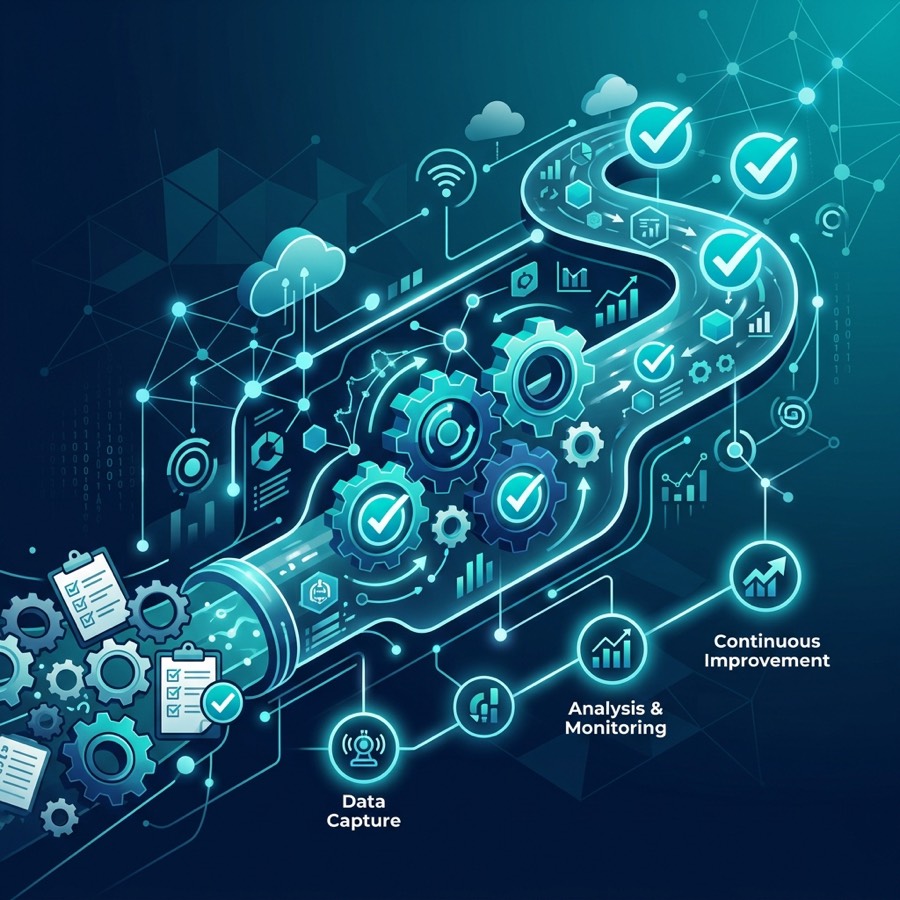
Digitalization isn't scanning paper forms into PDFs — that's digitization, and it solves almost nothing. True quality management digitalization means rebuilding your quality processes on a software platform that enforces workflows, captures data electronically, routes approvals automatically, and provides real-time visibility into quality performance.
CORPEX QMS takes this approach. Rather than simply replicating paper forms on screen, it restructures quality workflows around configurable approval chains, automated notifications, escalation rules, and dashboards that surface problems before they become audit findings.
Key Quality Processes That Benefit Most From Digitalization
Document Control — The Foundation
Every quality system starts with document control, and it's typically the first process to digitize. A digital document management system provides version-controlled SOPs with automated review cycles, electronic approval routing with signature capture, controlled distribution — users access documents through the system rather than printing copies, automatic training assignment when new document versions are released, and retirement workflows that ensure superseded documents are no longer accessible.
CORPEX Informatics builds document control into the QMS platform rather than bolting on a separate document management system. That means SOPs link directly to training records, deviations, and change controls — all within one system.
Deviations, OOS, and CAPA Management
Deviation and CAPA management is where digital QMS earns its keep. The system enforces investigation timelines and escalates overdue items automatically, links deviations to root cause analysis workflows and corrective actions, tracks CAPA effectiveness verification and ensures follow-up is completed, and provides trending data that reveals recurring quality issues — something nearly impossible with paper-based tracking.
Change Control Workflows
Change control in a regulated environment involves impact assessment, multi-department approval, implementation tracking, and effectiveness review. In a paper system, this process takes weeks. In a digital QMS, it takes days — because routing, notifications, and approvals happen automatically.
Audit Management
When an auditor asks for your deviation trending data for the last two years, do you want to compile it from spreadsheets and logbooks — or pull it from a dashboard? CORPEX QMS maintains a complete audit trail of all quality events, making audit preparation a matter of generating reports rather than assembling binders.
Getting Started Without Boiling the Ocean
The biggest mistake in quality management digitalization is trying to digitize everything at once. A phased approach works better:
- Phase 1: Document control and training management — These are foundational and affect every other process. Get them right first
- Phase 2: Deviation and CAPA management — This is where you'll see the most immediate regulatory risk reduction
- Phase 3: Change control and audit management — Build on the foundation with more complex workflows
- Phase 4: Supplier quality and complaint handling — Extend the system to external-facing quality processes
Each phase takes 2-3 months for a mid-size organization when implemented with experienced consultants who understand both the technology and the regulatory requirements.
Looking Ahead
CORPEX Informatics has guided pharmaceutical, food, and chemical manufacturers through this exact journey — from paper-heavy quality systems to fully digital QMS platforms that satisfy regulators and actually make quality teams more productive. The technology exists. The regulatory expectation is clear. The only question is whether your organization moves now or waits for an audit finding to force the issue.
Still Managing Quality With Paper and Email?
See how CORPEX QMS digitizes your quality workflows from document control to CAPA management.
Request a Demo