Three acronyms get thrown around as if they're interchangeable. They aren't. LIMS, ELN, and SDMS solve different problems, and buying the wrong one — or assuming one covers all three jobs — is how labs end up with expensive software that still doesn't do what they needed.
Here's the plain-language version, without the vendor fog.
LIMS: the system of record for samples and results
A Laboratory Information Management System is sample-centric. Its job is to answer one question for every sample that walks in the door: what happened to it, and what was the result? It registers the sample, assigns the tests, tracks it through the workflow, captures results (often straight from instruments), checks them against specifications, and produces the Certificate of Analysis. It holds the audit trail that proves all of it.
If your work is routine testing — QC, food safety, water quality, stability — the LIMS is your backbone. It's structured, it's repeatable, and it's built around specifications and pass/fail decisions. This is the system most labs need first, because sample throughput and result integrity are the core operational problem.
ELN: the scientist's notebook, made electronic
An Electronic Lab Notebook is experiment-centric. It replaces the paper notebook — the place a scientist writes down what they're trying to do, how they set it up, what they observed, and what they concluded. It's free-form by nature, because research doesn't fit neatly into predefined fields.
Where a LIMS asks "did this sample pass?", an ELN asks "what did we learn?". That makes ELN the right tool for method development, formulation work, and R&D — anywhere the value is in the reasoning, not just the result. In a pure QC lab, an ELN is often overkill. In a discovery or development lab, it's essential.
SDMS: the vault for raw instrument data
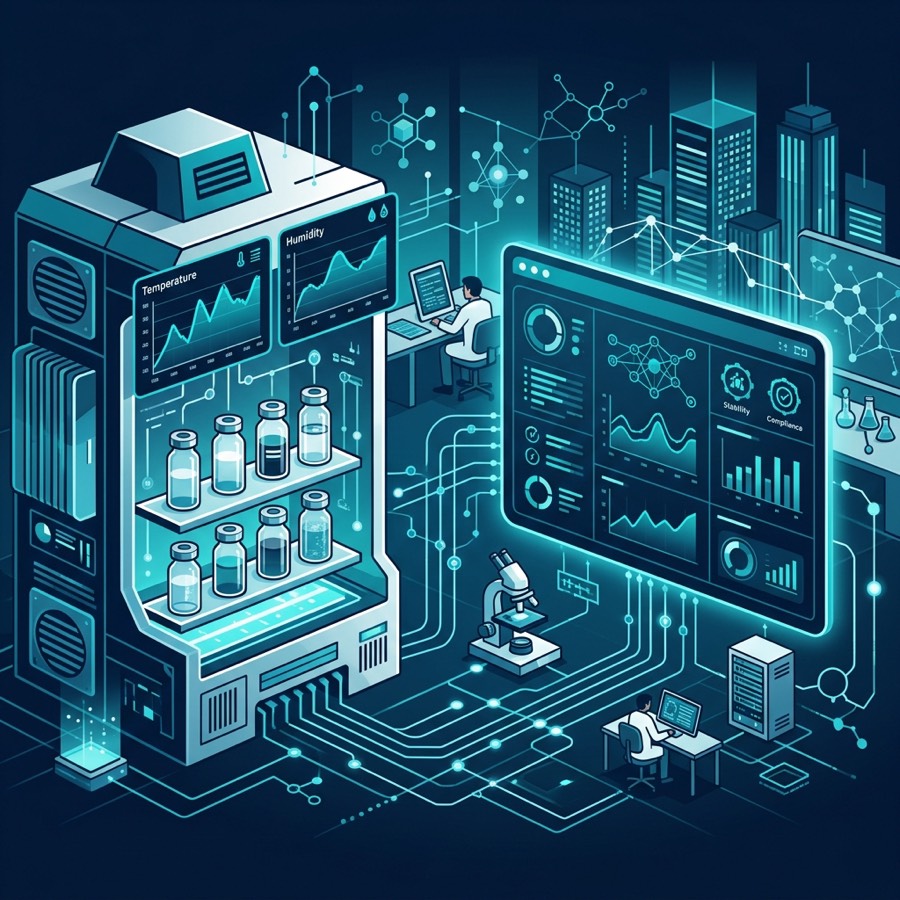
A Scientific Data Management System sits underneath both. Its job is to capture and preserve the raw output of instruments — the chromatogram, the spectrum, the native instrument file, the PDF — in its original, untouched form, and index it so you can find it again.
This matters for one word: traceability. A LIMS records the final reportable number. The SDMS preserves the raw data that number came from. When an auditor asks you to prove a result traces back to source data that nobody edited, the SDMS is what answers. For regulated labs under ALCOA+ expectations, that's not optional.
Where they overlap (and where labs get confused)
The confusion is real because the lines blur at the edges. Modern LIMS platforms capture some raw data, so people ask why they'd need an SDMS. Some ELNs handle structured results, so people ask why they'd need a LIMS. The honest answer: each system is best at the job it was designed for, and forcing one to do another's work is where projects bog down in customisation.
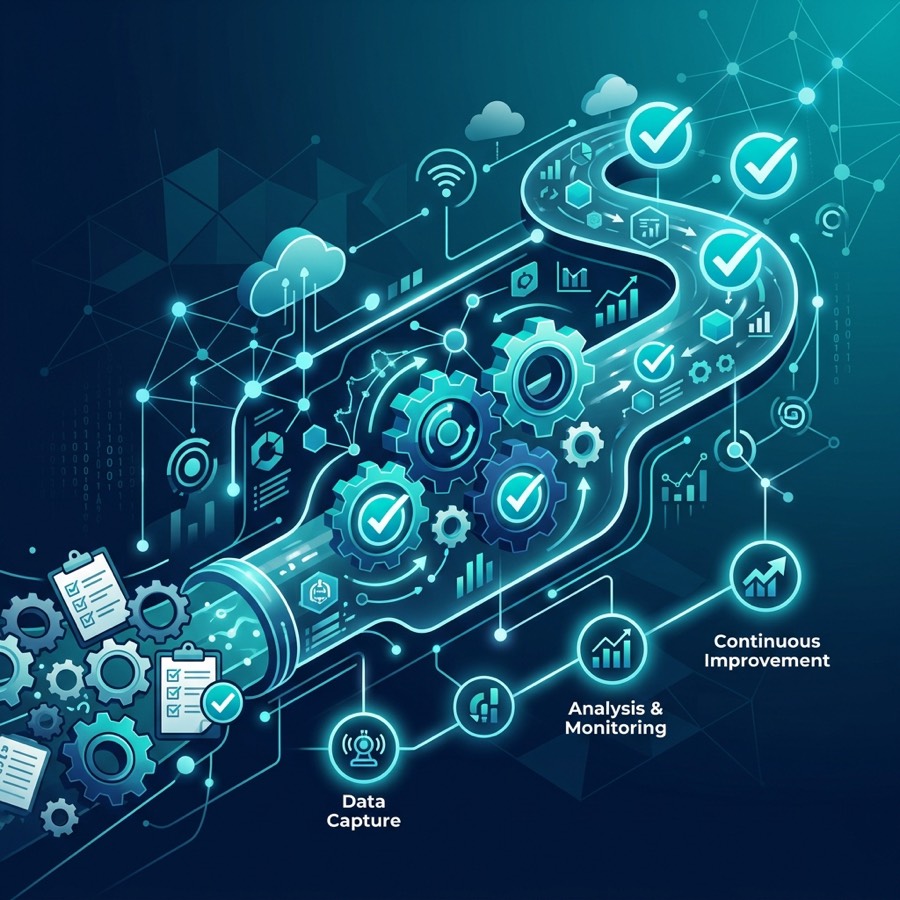
The useful way to think about it: SDMS preserves the raw, LIMS manages the result and the sample, ELN captures the experiment and the thinking. Raw data flows up into the LIMS as results; finished experiments in the ELN feed into the LIMS as registered work.
Which does your lab actually need?
Start from the work, not the acronym. A routine testing lab — pharma QC, food, water, environmental — needs a LIMS first, and adds an SDMS as data-integrity demands grow. An R&D or development lab gets more early value from an ELN. A regulated lab heading for EGAC ISO/IEC 17025 or an EDA inspection needs, at minimum, the LIMS-plus-data-integrity combination, because that's where the audit trail and traceability live.
You don't necessarily need three separate systems from three vendors. A platform that combines the functions — LIMS at the core, with raw-data management and notebook capabilities where you need them — avoids the integration headache of stitching disconnected tools together. That's the approach behind CORPEX LIMS, which includes the ELN rather than selling it as a separate product, and for labs in Egypt and the region we cover how it fits local compliance on our LIMS for Egyptian laboratories page.
LIMS vs ELN vs SDMS — FAQ
What is the difference between LIMS and ELN?
A LIMS manages samples, tests, results and workflows — it answers "what happened to this sample and what was the result." An ELN records the scientist's narrative: experimental design, observations and reasoning. LIMS is structured and sample-centric; ELN is free-form and experiment-centric. Many labs run both, with the ELN feeding finished work into the LIMS.
What does an SDMS do that a LIMS doesn't?
An SDMS captures, stores and indexes the raw output of instruments — chromatograms, spectra, instrument files, PDFs — in original form. A LIMS records the final reportable result; the SDMS preserves the underlying raw data behind it, which is what lets you prove a result traces back to untouched source data.
Do I need all three?
Most labs start with a LIMS because sample and result management is the core need. Regulated QC labs often add SDMS for raw-data integrity; R&D labs add ELN for experiment capture. A modern platform can combine the functions so you don't run three disconnected systems.
Is a LIMS or ELN better for a pharma QC lab?
For pharmaceutical QC, a LIMS is the priority. QC work is sample- and specification-driven: register, test, compare to limits, release or reject. An ELN adds value for method development, but the QC release workflow, stability program and audit trail live in the LIMS.
Not sure which system your lab needs?
Talk to a CORPEX specialist about a platform that fits your actual workflow — in Arabic or English, priced in EGP.
See CORPEX LIMS for Egypt