

Every few years, the question resurfaces in pharma IT circles: "We already run SAP — can't we just extend it to cover our lab?" It sounds logical on the surface. SAP ERP touches procurement, financials, production planning, and quality management. Why bolt on another system?
The short answer? Because running a lab isn't the same as running a factory floor. And the longer you try to force SAP's QM module into a LIMS-shaped hole, the more you'll spend on workarounds, custom ABAP code, and frustrated analysts.
Let's unpack this properly.
What SAP QM Actually Does Well
Credit where it's due — SAP's Quality Management module is solid for what it was designed to do. It handles inspection lot creation from production orders, manages quality notifications and disposition decisions, and feeds quality data back into materials management. If your quality workflow lives entirely within the production-to-release pipeline, SAP QM can carry a lot of weight.
The module also integrates neatly with SAP's Materials Management (MM), Production Planning (PP), and Sales & Distribution (SD) modules. That tight coupling is its biggest strength — and, ironically, its biggest limitation when applied to laboratory work.
Where SAP Falls Short in the Lab
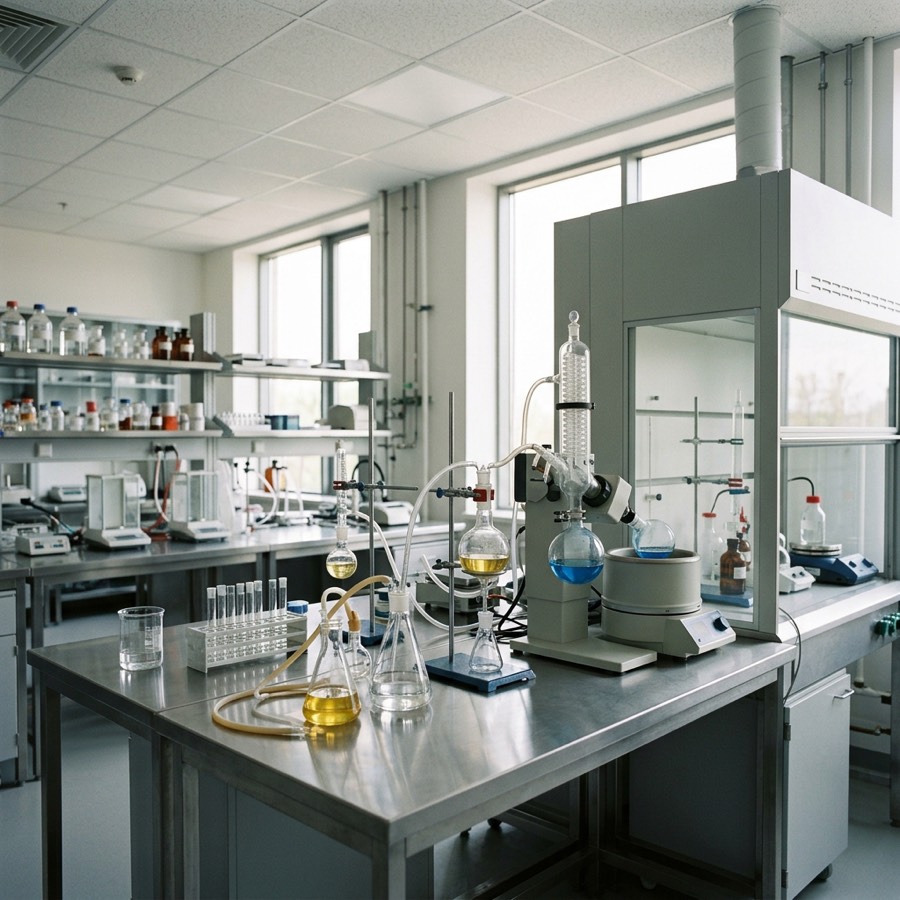
Laboratory operations have their own rhythm. Samples arrive in batches, get split into aliquots, move through multi-step analytical workflows, and generate instrument data that needs to be captured electronically — often from dozens of different vendor instruments. SAP QM wasn't built for any of this.
Sample Tracking and Chain of Custody
A proper LIMS tracks every sample from receipt to disposal. That means parent-child sample relationships, aliquot management, storage location tracking with barcode/RFID support, and a full chain‑of‑custody audit trail. SAP QM works with inspection lots tied to material numbers — which is a fundamentally different data model. Try tracking a stability pull with multiple time points across multiple conditions in SAP, and you'll quickly see the gaps.
Direct Instrument Integration
This is the deal-breaker for most labs. A dedicated LIMS connects directly to HPLC systems, dissolution testers, spectrophotometers, Karl Fischer titrators, and particle counters — pulling raw data into the system without manual transcription. CORPEX LIMS, for instance, supports bi-directional instrument communication, which means the system can push sample worklists to instruments and pull results back automatically.
SAP QM has no native instrument integration layer. You'd need middleware, custom development, or a third-party connector — each adding complexity, cost, and validation burden.
Stability Study Management
ICH Q1A stability studies require precise scheduling of pull dates, condition management (25°C/60%RH, 30°C/65%RH, 40°C/75%RH), and trending of results over months or years. Stability LIMS software like CORPEX StabLIMS handles all of this natively — automatic pull scheduling, condition tracking, out-of-trend alerts, and shelf-life calculation.
In SAP, you'd need to build this from scratch, likely involving custom tables, workflows, and reports. That's months of development and a significant validation package for a GxP system.
Regulatory Compliance Features
Both SAP and LIMS systems can be validated to FDA 21 CFR Part 11 — that part is table stakes. But a purpose-built LIMS goes deeper: electronic signatures at the test level, result-level audit trails, out-of-specification (OOS) investigation workflows, automatic calculation verification, and configurable specification limits per pharmacopeial method (USP, EP, BP, JP).
SAP QM provides audit trails at the transaction level, but granularity at the individual result or measurement level requires extensive customization.
Functions a LIMS Handles That SAP Simply Doesn't
Key LIMS Capabilities Absent in SAP ERP
- Reagent & Standards Management — Track lot numbers, expiry dates, preparation records, and standardization factors
- Instrument Calibration Scheduling — Automated reminders, calibration curves, and equipment qualification records
- Analyst Training & Competency Records — Link training status to test authorization
- Environmental Monitoring — Scheduled sampling plans for cleanrooms, water systems, and compressed gases
- Method Management — Version-controlled analytical methods with specification limits and calculation formulas
- Certificate of Analysis Generation — Automated CoA creation pulling from approved results
Each of these represents a core laboratory function. Building them into SAP isn't impossible — but the cost of custom development, ongoing maintenance, and revalidation after each SAP upgrade makes it impractical for most organizations.
What About Specialized Industries?
The gap between SAP QM and a dedicated LIMS gets wider when you look at specific industry verticals:
- Petrochemical laboratories need petrochemical LIMS capabilities for crude oil assays, blending calculations, and specification management across hundreds of product grades
- Water utilities require water quality LIMS software with regulatory reporting formats (EPA, DWI), automated limit-of-detection handling, and sampling schedule management
- Bioanalytical labs depend on bioanalytical software for method validation workflows, concentration curve fitting, and pharmacokinetic data packaging
- Microbiology labs need specialized microbiology LIMS for organism identification tracking, environmental trending, and media preparation logs
SAP has no pre-built workflows for any of these use cases. A platform like CORPEX LIMS ships with configurable modules for each vertical, validated and ready for deployment.
The Right Approach: SAP and LIMS Working Together
The smartest pharma IT teams don't treat this as an either/or decision. They integrate SAP ERP with a dedicated LIMS through well-defined interfaces:
- SAP sends inspection lot requests, material master data, and batch information to the LIMS
- LIMS sends back usage decisions, Certificates of Analysis, and quality disposition data to SAP
- Both systems maintain their own audit trails, validated independently
This architecture plays to each system's strengths. SAP handles enterprise logistics and financials. The LIMS handles everything that happens between sample receipt and result approval. The integration layer keeps them in sync without forcing either system to do something it wasn't designed for.
CORPEX Informatics provides a pre-built integration toolkit for SAP connectivity, covering the most common data exchange scenarios with validated interface documentation that significantly reduces qualification effort.
For the detail of the interface itself, which data objects move between the two systems and how IDoc, BAPI, RFC or REST connections carry them, see our guide to LIMS and SAP integration.
The Bottom Line
SAP ERP is an excellent enterprise platform. It's just not a laboratory platform. Attempting to stretch SAP QM into a full LIMS replacement typically results in higher total cost of ownership, longer implementation timelines, reduced laboratory efficiency, and compliance gaps that only surface during regulatory inspections — which is the worst possible time to discover them. If you already run SAP, start with the LIMS to SAP integration guide.
If you're evaluating LIMS software for your pharmaceutical, chemical, or food safety laboratory, start with a system purpose-built for lab workflows. Then integrate it with your ERP. That's the approach that regulatory agencies expect, auditors respect, and laboratory teams actually want to use.
Need a LIMS That Integrates With Your ERP?
CORPEX LIMS ships with pre-built SAP integration connectors. See it in action.
Request a Demo